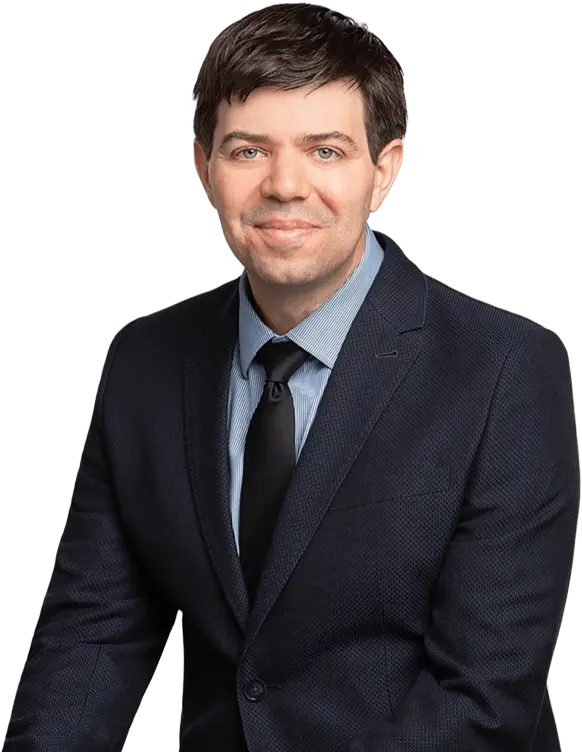
TheAnnuityLeads.com founder discusses the experiences that led him into the business, the lessons learned from more than a decade of annuity advertising, and why the company continues to favor quality over quantity.
What led you to start a lead-generation company?
There were two main reasons.
First, I always knew I wanted to be self-employed. I wanted to call my own shots and, most importantly, do things the way I believed they should be done. Working for several large financial institutions gave me valuable experience, but it also showed me the limitations of trying to build something inside another company’s system.
The second reason came directly from financial advisors and insurance agents.
From 2007 through 2009, I operated RolloverCoach.com, a national training platform focused on helping financial professionals grow their 401(k) rollover business. Approximately 7,000 advisors were on our email list, and several thousand people went through the training.
I sent that audience a survey asking, “How can I help you most next year?” About 90 percent of the responses said some version of the same thing: “Get us in front of more people.”
That made the problem very clear. The advisors did not just need more information. They needed opportunities to put that information to work. I decided to learn everything I could about lead generation because I knew it would always be a valuable skill.
That decision led to the business we started in 2010.
What did you do before entering the lead business?
I graduated from the University of Texas at Austin in December 1996 with a finance degree. I had already spent all four years of college selling books door to door for the Southwestern Company to help pay for school, so sales was part of my background from an early age.
My first job after college was as a manufacturer’s representative for Dentsply International. It was a good opportunity, but my heart was not in the dental industry. I was interested in investing and financial services, which was what I had studied in college.
In 1998, I joined Edward Jones in Carlsbad, California. I remember studying for the Series 7 exam on the beach in San Diego. It was a beautiful place to begin my financial career, although building a book of business was not easy.
Edward Jones taught me a great deal about prospecting. We knocked on doors, worked community events, and made cold calls. I eventually received the company’s Ted Jones Prospecting Award after opening approximately 200 new accounts.
That experience also taught me about the inefficiency of traditional prospecting. You could spend an entire day speaking with people who did not have investable assets, did not need help, or might not need help for several years. I was comfortable doing the work, but I could see that there had to be a better way to connect advisors with people who had a timely need.
How did you move from Edward Jones to Fidelity?
After Edward Jones, I joined Bank United Securities in Dallas. I enjoyed the bank environment, but Washington Mutual acquired the bank and significantly changed our compensation plan. That caused me to think more carefully about the long-term direction of my career.
Fidelity Investments had a major presence in Dallas and was hiring people with outside industry experience. I joined a group that called people who were changing jobs or retiring. It was one of the more advanced roles in the call center because those conversations frequently involved important retirement decisions.
I worked at Fidelity for almost five years. During that time, I completed an MBA at night, finished the coursework required to sit for the CFP® exam, and passed the exam before leaving the company.
Fidelity gave me a valuable view behind the scenes of the rollover market. I saw how large recordkeepers operated, how they communicated with participants, and what advisors were competing against when a client left an employer.
I later worked for Comerica Securities in Houston. Altogether, my career exposed me to an independent brokerage, two bank investment programs, and one of the world’s largest financial-services companies. That variety shaped the way I think about advisors, consumers, and financial marketing.
When did you first become interested in online marketing?
It began while I was at Fidelity.
I created a dating site called Ambitious Singles, Inc. before Facebook was widely available. The idea was to connect educated professionals through alumni communities at approximately 50 large universities. I built the network to about 100,000 users through paid online advertising.
The business ultimately closed after several universities objected to the way their schools were incorporated into the sites. It was an early entrepreneurial lesson, but it also gave me significant hands-on experience with online advertising and customer acquisition.
Around the same time, I began advertising my father’s law practice. He was a solo real estate and bankruptcy attorney in Houston with one assistant. We marketed the practice across Texas and generated several hundred clients.
Those projects showed me that online advertising could connect a specialized business with people who had a specific need. I did not know then that marketing would become the focus of my career, but I was already building the foundation.
How did RolloverCoach.com begin?
My father passed away unexpectedly a few months after I returned to Houston in 2005. He was one of my best friends, and we spoke every day. I had planned to establish a fee-only registered investment advisory firm, but after his death I was not in the right place to build that business.
I worked for Comerica Securities for a little more than a year and then, in 2007, founded RolloverCoach.com.
The training drew on what I had learned at Fidelity and throughout my financial-services career. I helped agents and advisors understand how the rollover process worked inside major recordkeepers and how they could improve their own rollover business.
Field marketing organizations hired me to speak at events, and the platform introduced me to thousands of people across the industry. Just as importantly, it exposed the gap between training and execution. Advisors could understand the strategy perfectly, but without prospective clients, they had no one with whom to use it.
That was the gap the lead business was created to fill.
What did your first lead program look like?
In 2010, we started with 401(k) rollover leads because that was the market I knew best.
Our first large program involved co-registration campaigns with Monster.com and CareerBuilder. Because those were national employment sites, I recruited approximately 300 agents and advisors to give the program a broad geographic footprint.
The leads initially sold for only $35. Our cost was around $20 to $25, so this was not a high-margin program. It was an experiment intended to solve the problem our training clients had identified.
The experience taught me that control over the consumer journey is essential. Because the leads were generated on someone else’s platform, information was often prepopulated and we could not design the entire experience ourselves. The consumers also tended to be younger, and the available rollover balances were often too small to make the economics work well for advisors.
We created our own online rollover campaigns and also tested outbound calling to people found through career data. Our internally generated leads were better, but the typical opportunity still involved someone between 35 and 60 years old with less than $100,000 available to invest.
The program produced valuable lessons, but it was not the right long-term market.
Why did you shift to annuity leads?
In early 2011, I tested annuity leads with approximately 10 existing clients. They received both rollover and annuity opportunities, and nearly all of them strongly preferred the annuity leads.
The difference was easy to understand. Annuity prospects were generally between 55 and 80 years old, had more investable assets, and were addressing decisions that felt more immediate. The typical cases were much larger than the rollover opportunities we had been generating.
Appointment ratios were also higher. When someone is changing jobs, finding the next job may feel more urgent than deciding what to do with an old 401(k). For someone approaching or living in retirement, financial security can be a central concern.
That initial test made our direction clear, and we gradually transitioned the company from rollover leads to annuity leads.
How did the company advertise in its early years?
We initially focused on national radio. We advertised on major talk-radio programs and offered an audio CD about avoiding common mistakes when purchasing an annuity.
The radio leads could be good, especially because consumers called us directly. But the offer taught us another important lesson: educational products can delay the real conversation. When an advisor followed up, the consumer could say, “I haven’t listened to the CD yet. Call me next week.” Books, reports, videos, and similar offers can create the same problem.
From 2011 through 2014, we concentrated primarily on radio and television. In 2014, we expanded our digital campaigns. From then until the pandemic, our advertising included a mixture of television, radio, and online media. Since the pandemic, most of our lead generation has been digital, while traditional media can still serve a supporting branding role.
Over the years, we have also tested email campaigns, package inserts, call-center programs, and numerous types of online campaigns. We have advertised on major national news, business, sports, and entertainment networks and on both local and national radio and television.
I have personally directed more than eight figures in annuity advertising. That experience matters because our process was not created from a theory about what should work. It was shaped by years of testing what actually happened after the lead reached an agent or advisor.
What were the biggest turning points in improving lead quality?
One turning point was moving from educational fulfillment to a more proposal-based experience.
With the original audio-CD offer, almost anyone who submitted basic contact information could become a lead. The advisor then had to send the material, wait for the consumer to review it, and try to restart the conversation later.
Beginning in 2014, we shifted toward offers that gave the advisor a reason to discuss the consumer’s goals and potential options during the first conversation. That reduced the distance between requesting information and discussing what the person was actually trying to accomplish.
Another turning point was increasing the amount of screening. We became more selective about age, investable assets, and the information someone had to provide. We also invested more in the quality of the process.
For a period, I was too reluctant to raise prices. I wanted to keep the program affordable, but eventually I learned that capable producers would rather pay more for a stronger opportunity. A low price is not helpful if the product does not give the client a reasonable chance to succeed.
What makes one lead stronger than another?
The more meaningful effort consumers put into the process, the stronger the lead tends to be.
It begins with the advertisement. The language, subject, and tone determine who responds. We have spent years developing messages intended to resonate with experienced investors who have meaningful assets and a genuine interest in annuities.
The next factor is the process itself. Depending on the campaign, our prospects may answer 12 to 20 questions. Compare that with a process that asks only for a name, telephone number, and three or four basic answers. Those two records may both be called “leads,” but they do not represent the same level of consumer involvement.
Our analysis found that consumers spent approximately 30 to 35 percent more time completing our online process than they spent becoming a lead through our call center. That additional time suggests they are reading, thinking, and making a more deliberate decision to respond.
The consumer’s first impression is equally important. Many annuity advertisements rely on hype or eye-catching claims. That may produce clicks, but it does not necessarily establish trust. We want the message and process to give the consumer confidence that the eventual conversation will be professional.
Does a high-quality lead guarantee success?
No. A lead is an opportunity, not a guaranteed appointment or sale.
Sales ability, responsiveness, persistence, and professionalism all matter. Even an excellent opportunity cannot compensate for weak follow-up or an inability to build trust with a prospective client.
One of the most important lessons I have learned is that we work best with capable producers who understand how to manage a lead. They respond promptly, follow a consistent process, remain patient, and treat each person professionally.
We have served producers at many levels, but our goal today is not to sign up the greatest possible number of clients. We want a smaller group of agents, advisors, and organizations that value quality and intend to build a long-term relationship.
How do you decide which advertising channels to use?
We follow results rather than becoming attached to a particular channel.
Radio and television leads can be easier to reach by telephone because the consumer often responds by calling. At the same time, those prospects may be more likely to postpone the financial conversation. Unfortunately, they are also more likely to be over 80 and have less than $250,000 in total assets which is not ideal.
Digital leads sometimes require more effort to contact. When an advisor reaches them, however, they can be more deliberate and serious because they have spent time reading the message and completing the process.
Each medium has strengths and weaknesses. Agents are ultimately interested in the opportunities that can lead to productive conversations and business. That is what matters to us too, so our job is to direct the advertising budget toward the sources producing the strongest results.
Who works behind the scenes at TheAnnuityLeads.com?
We are a small, experienced, hands-on team.
My brother, Bryan, has worked with me since approximately 2013. He manages important relationships with existing clients and helps new clients get started. He also oversees billing, customer service, and technology.
I direct media buying, work with our FMO partners, and help clients with questions about sales and working their leads.
Our lead-screening team includes three people. Two have been with the company for more than a decade, and the third has been with us for two years. That kind of continuity is unusual and important. They understand our standards and care about the accuracy of the work.
Our culture is independent and based on trust. We expect people to take care of customers, minimize errors, and do the right thing.
What are you proudest of?
I am proud that we have built an honest business and that it has endured for more than 15 years.
Advertising platforms have changed. Media habits have changed. Consumer expectations and the annuity industry have changed. We have continued to adapt without abandoning the values on which the company was founded.
I am also proud of the relationships. Team members have stayed with us for a decade or more, and many clients have worked with us over long periods. Those relationships mean more to me than simply becoming the largest provider.
What do you want the company to become?
I want TheAnnuityLeads.com to remain focused on quality rather than quantity.
Earlier in the company’s history, I was willing to enroll hundreds of people in a year. That is no longer the goal. I would rather work with a select group of strong producers who understand our process, serve consumers well, and remain with us for years.
I also want the business to continue becoming less dependent on any one person, including me. That means developing people who can take on more responsibility while preserving the standards and values that have guided us from the beginning.
Most of all, I want the company to be a beacon of trust in the industry—a place agents and advisors can turn to without worrying about being misled or taken advantage of.
That is what we have tried to build since 2010, and it remains the goal today.